

Markdown is a file format, not just a syntax.
Most people think of Markdown as a way to format text, using ** to make words bold or # to create headings. That's true, but it's only half the picture.
Markdown is also a file format. An .md file is a plain-text document. It has no binary encoding, no proprietary structure, and no hidden data. Open one in any text editor, on any operating system, and you'll see exactly what's inside, readable, human-friendly text.
That simplicity is the whole point. Plain text is the most durable file format ever invented. It works everywhere, always has, and always will.
What 'Markdown-first' means
A Markdown-first tool stores your writing as real .md files from the very first word you type. There is no translation, no conversion, and no layer of abstraction between what you write and what gets saved.
When you create a document in a Markdown-first editor, the file on your device is the actual document. It's not a representation of your document, or a snapshot of it, or a version converted for your convenience. It is the thing itself.
Markdown-first means your content lives, breathes, and grows in Markdown from day one. No conversion. No hidden format. No surprises.
This means you can open your files in any other text editor at any time. You can read them in the terminal. You can commit them to a Git repository. You can run scripts over them. You can back them up with any backup tool. You can move them between computers without worrying about compatibility.
What happens when a tool is not Markdown-first
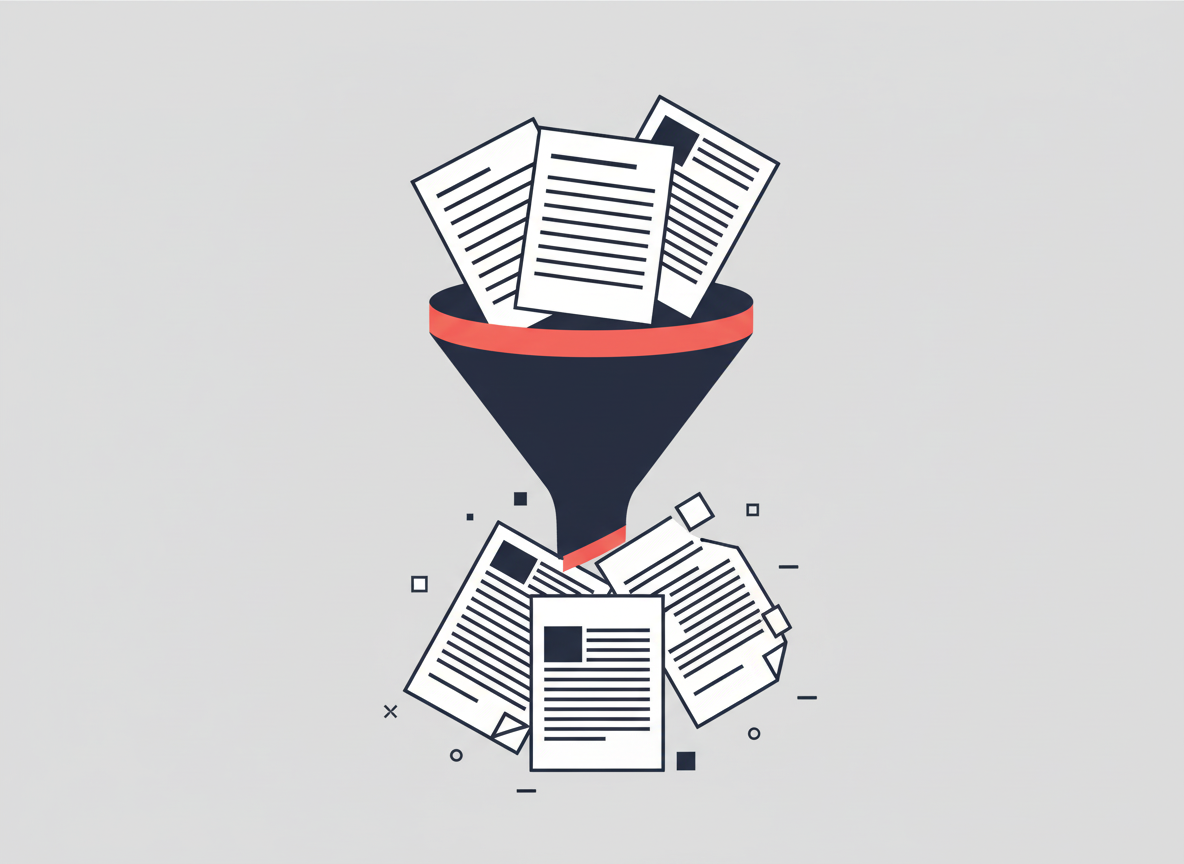
Some tools use Markdown as an input method; you type Markdown syntax, and it renders correctly, but they save your content in their own internal format underneath. Your writing might live in a proprietary database, a binary file, or a custom schema that only the app fully understands.
This isn't inherently bad. Many excellent tools work this way. But it does have practical implications worth understanding:
Exporting your writing requires a conversion step, and conversions are never perfectly lossless.
Your files are readable only inside that specific app.
Switching tools in the future may require cleanup.
The app becomes the gatekeeper of your content.
Why is file format a long-term concern
In the short term, file format doesn't feel important. Your writing looks the same, your workflow feels the same, and everything works as expected.
The difference becomes significant over time, particularly when you consider how long good writing lasts. A blog post you write today might be relevant for a decade. Research notes you take this year might become the foundation of a project five years from now. Writing is a long-term investment.
A file stored as plain Markdown will be readable in 2035, 2045, and beyond, because plain text doesn't age. It requires no software company to remain in business, no format to remain supported, and no export tool to work correctly.
When you choose a Markdown-first tool, you're choosing a format that exists outside any single company or product. That's a meaningful form of ownership.
Portability without effort
One practical consequence of Markdown-first is that portability requires no effort. Your files are already in the universal format.
Want to open a document in a different editor? Copy the file and open it. Want to share a draft with someone who uses a different tool? Send the .md file; they can open it anywhere. Want to write a script that processes your notes? The files are plain text, ready to work with.
There's no export step. No conversion dialogue. No warning about formatting that might not transfer correctly. Portability is just there by default because of how the files are stored.
Markdown-first and version control
For developers and technical writers especially, one underappreciated benefit of Markdown-first storage is native compatibility with version control systems like Git.
Because your files are plain text, every change is diffable. You can see exactly what changed between two versions of a document, word by word, line by line, using standard tools. You can branch, merge, and roll back your writing the same way you manage code.
This isn't possible with binary formats or proprietary databases. It requires files that are truly plain text, which is exactly what Markdown-first provides.
Your writing should outlive every app.
Software products change. Pricing changes. Companies get acquired. Features get moved behind paywalls. Apps get discontinued. This is just the nature of the software industry.
The most resilient choice you can make as a writer is to keep your content in a format that isn't dependent on any of that. Plain Markdown files sit on your file system, indifferent to what any company decides. They don't care about subscription changes, product pivots, or app shutdowns.
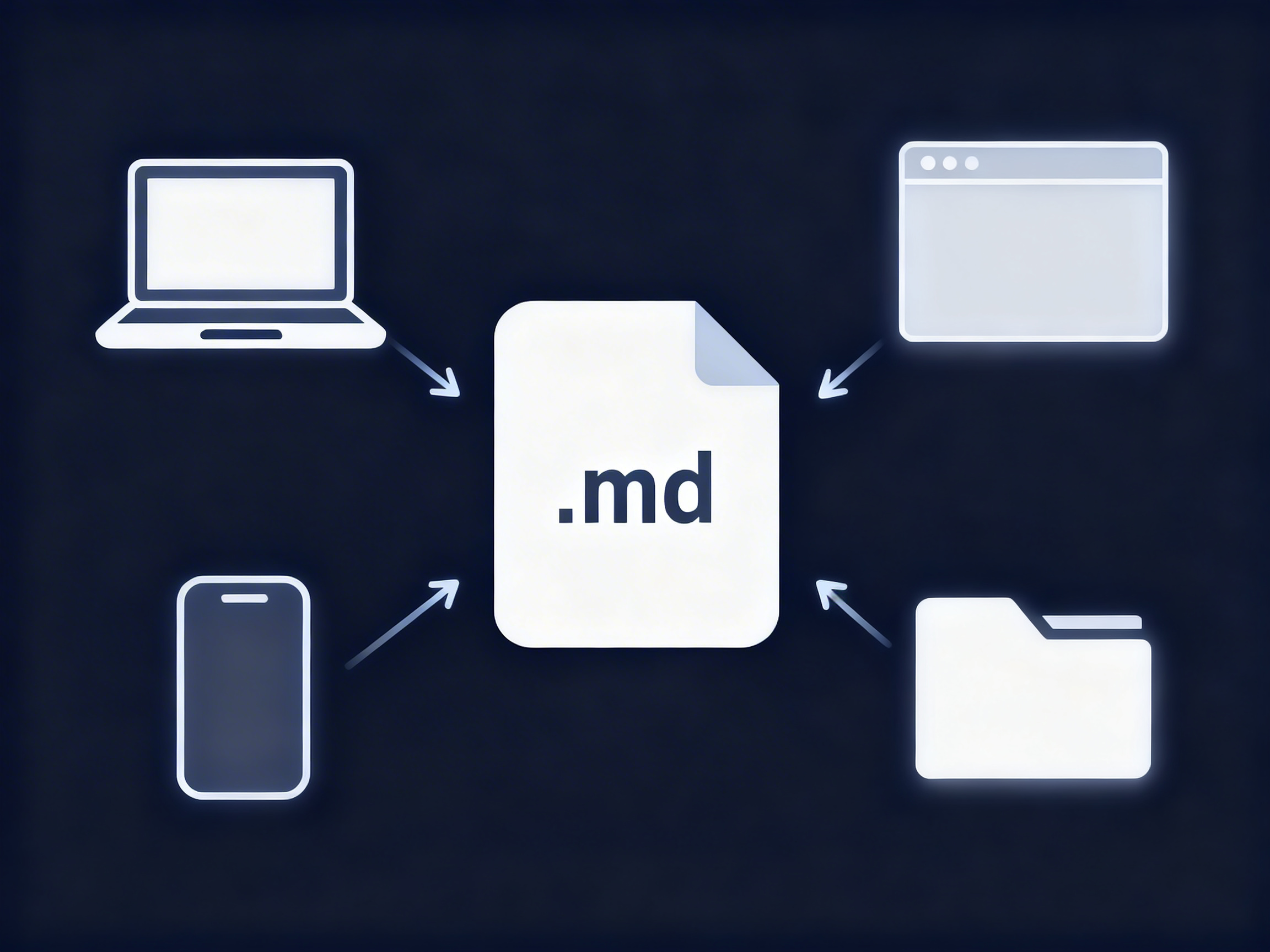
Your words belong to you. Not to the app, not to a database, not to a company's roadmap. They're just files, and files last.
Markdown-first is a practical expression of that principle. It's not about being anti-technology or distrusting software. It's about making a deliberate choice to keep your writing in a format that serves you, regardless of what happens to any particular tool.
Choosing deliberately
Before adopting any writing tool, it's worth asking one simple question: what format does my content actually live in?
If the answer is 'real .md files, always', you have full portability, full ownership, and full confidence that your writing will be accessible forever.
That's what Markdown-first means. And for writers who think about their work as a long-term investment, it's a choice worth making deliberately.